Tooth Pain Relief in Bali
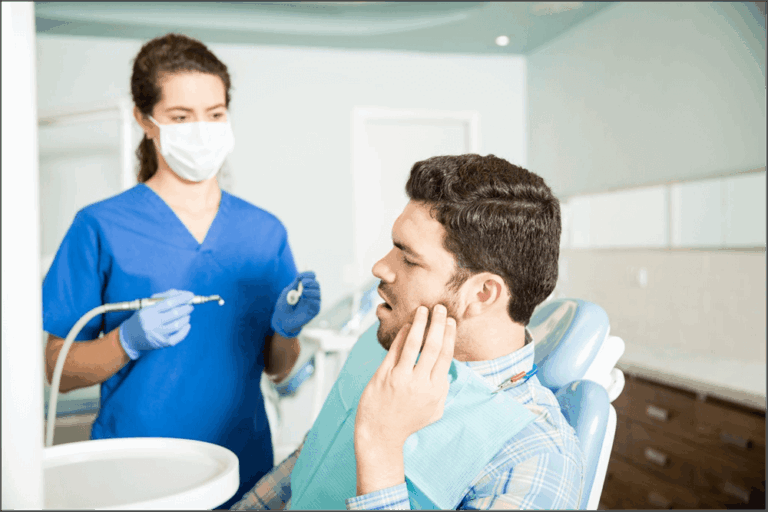
A bad toothache is probably the fastest way to ruin a good holiday. It just completely hijacks your day and puts everything on pause. That throbbing pain that keeps you up at night isn’t just a minor annoyance, it’s usually your body’s way of signaling a deep infection. If you’re desperately looking for effective tooth pain relief in Bali, understanding what’s actually happening inside your tooth is the first step to fixing the problem permanently.
The Real Cause of Your Discomfort
Pain like this rarely happens overnight. It usually starts as a simple, painless cavity that gets ignored. Over time, bacteria slowly eat through the hard enamel down to the soft center of the tooth, where the nerve lives. Once that nerve gets infected, inflammation builds up inside the tooth. Because the tooth is hard and inflexible, that inflammation
has nowhere to expand. That trapped pressure is exactly what causes that intense, unbearable throbbing that sends you rushing to the clinic.
The Bali Travel Factor: Why Your Tooth Started Hurting Now
I often hear patients ask, “Why did this have to happen exactly when I went on vacation?” It feels like bad luck, but there is actually a lot of science behind it. Travel itself can trigger a dormant dental issue to suddenly wake up and scream.
1. The Airplane Effect (Barodontalgia)
Did the pain start shortly after your flight landed at Ngurah Rai Airport? When you fly, the cabin pressure changes dramatically. If you have a deep cavity or a faulty filling, tiny air pockets can get trapped inside the tooth. As the plane ascends and descends, that trapped air expands and contracts, pushing against the already-irritated nerve. We call this “tooth squeeze,” and it can turn a mild issue into a full-blown crisis by the time you grab your luggage.
2. Scuba Diving and Snorkeling
Bali is famous for its underwater life. But just like flying, diving underwater puts your body through significant pressure changes. If you have been diving around Amed or the Gili Islands and suddenly developed a sharp toothache, that underwater pressure likely compressed the gas pockets inside a decaying tooth.
3. Dietary Changes
Vacation means eating differently. You might be chewing on hard nuts, indulging in sweet tropical drinks, or munching on crackling pork belly (Babi Guling). These new, often hard or sticky foods can easily fracture a tooth that was already weakened by decay, exposing the sensitive inner layers to the outside world.
Why Temporary Tooth Pain Relief in Bali Isn’t Enough
When you are hurting, reaching for painkillers or numbing gels is a totally natural reflex. Many patients walk into my clinic after taking maximum doses of ibuprofen and paracetamol just to get through the night.
Medication only masks the problem. Painkillers are basically just muting the fire alarm, but the house is still burning down. They block the pain signals from reaching your brain temporarily so you can function, but the bacterial infection remains entirely active. As soon as the pills wear off, the pain comes swinging right back, often worse than before.
Relying on antibiotics alone won’t cure it. Antibiotics travel through your bloodstream. Once the nerve inside your tooth gets severely infected or dies, the blood supply to the inside of that tooth stops. This means the antibiotics literally cannot reach the bacteria hiding inside the root canals. The only way to stop the infection is to physically go in and clean it out.
Root Canal Treatment: Eliminating the Source
People often cringe at the words “root canal,” thinking it’s the absolute worst-case scenario. Actually, endodontic therapy is a highly effective, routine procedure designed to get you out of pain immediately while saving your natural tooth.
Here is what actually happens in the chair. We gently go in and remove the sick nerve that’s causing all the trouble. After making sure the inside space is totally clean and washed out, we fill it up and seal it tight. Simple as that, the bacteria can’t get back in, and your pain stops. The infection is gone, and so is your pain.
Root Canal vs. Tooth Extraction: Making the Smart Choice
When the pain is severe, many patients sit in the dental chair and just say, “Please, just pull it out!” While an extraction definitely stops the pain today, it often creates bigger, more expensive problems tomorrow.
Losing a tooth messes with your natural bite, makes chewing difficult, and causes your remaining teeth to slowly shift out of their proper positions. Saving your natural tooth with a root canal means you keep your natural chewing strength and avoid needing expensive implants or dental bridges down the road. It’s almost always the smarter, more cost-effective choice for your long-term health.
See Also: Emergency Dentist Near Me
When to See an Emergency Dentist in Ubud?
A quick zap of pain when you sip an iced coffee is usually just standard sensitivity. It goes away in a second. But there is a huge difference between a sensitive tooth and a full blown dental emergency.
Do not wait if:
- The pain wakes you up from a dead
- You feel a dull, constant ache that doesn’t go
- It hurts incredibly bad when you bite down or chew on that
- You see a pimple-like bump on your gums near the painful
- Your face or jaw feels swollen or hot to the touch
If you’re based around town and notice these warning signs, don’t try to just brave it out or sleep it off. You genuinely need an emergency dentist in Ubud before things get worse. When you walk into Nusa Medica Dental Care in pain, our absolute priority is simply making it stop. We handle cases exactly like yours all the time, so you’re in safe hands.
Understanding the Root Canal Treatment Cost
One of the biggest concerns patients have is the financial side of endodontic care. People always want to know about the root canal treatment cost upfront, which is totally fair. Honestly, the price really just depends on which tooth is hurting. A front tooth is usually a quick job because it only has one straight root. But if it’s a big molar in the back, things get tricky. Those back teeth can have up to four tiny, curved canals hiding inside, so they take much more time and skill to clean out properly. We always make sure you know the exact price before we even touch the tooth.
Why You Might Need a Crown Afterward
A common question we get is whether the treatment stops once the pain is gone. After a root canal, the tooth is essentially hollowed out and no longer receives a blood supply. The catch is that a tooth without a live nerve eventually dries out and gets a bit brittle. If you bite down on a peanut or something hard down the line, the tooth might split. That’s why we usually suggest putting a crown over it. It acts like a helmet, keeping the tooth strong so you can eat normally without worrying.
Can I Fly After the Procedure?
Since many of our patients are visitors, travel concerns are very common. Generally, it is perfectly safe to fly a few days after a root canal. However, the changes in cabin pressure during a flight can sometimes cause mild discomfort if the surrounding tissue is still slightly inflamed. We always make sure to evaluate your travel schedule during the consultation to plan the treatment stages safely around your flight out of Bali.
If we catch the infection early and treat it quickly, most patients fly with zero issues. If you had a massive, long-standing infection, it’s usually advised trying to keep at least 48 to 72 hours between your treatment and your flight if your schedule allows. Always carry some ibuprofen in your carry-on bag just in case. When you come in for your emergency visit, we will always discuss your travel itinerary and plan the treatment safely around it.
The Most Common Questions from Patients
When you are in pain in a foreign country, you naturally have a lot of questions. Here are the most common things people ask me before they sit in the chair:
“Do I need to take a course of antibiotics before you can do the root canal?”
No, and this is an old myth. You don’t need to wait for antibiotics to “calm the infection down” before we treat it. In fact, physically opening the tooth and washing out the bacteria is the fastest way to stop the infection. We only prescribe antibiotics if you have a fever, severe facial swelling, or if you feel physically sick. Otherwise, the procedure itself is the cure.
“How many visits will this take? I am only in Ubud for five more days!”
In modern dentistry, we can often complete a root canal in a single, slightly longer visit (usually about 60 to 120 minutes). If your tooth is heavily infected and actively draining pus, we might need to clean it out, put a strong antibacterial paste inside, close it with a temporary filling, and let it rest for a few days before we finish sealing it in a second visit. We adapt the treatment to what your specific tooth needs, but we can easily work within your holiday timeline.
“Is it safe if I am pregnant?”
Yes. If you are pregnant and in extreme pain, the stress and the spreading infection are actually much more dangerous for your baby than the dental treatment. We use local anesthetics that are completely safe for pregnant women. Don’t suffer in silence.
Your Next Steps: Stop Waiting, Start Healing
Living with dental pain is exhausting. It drains your energy, ruins your mood, and casts a dark cloud over what is supposed to be a beautiful time in Bali.
You do not have to just “tough it out.” Seeking expert help is the only way to secure real, lasting tooth pain relief in Bali. If your tooth is keeping you awake or stopping you from enjoying your meals, let’s figure out what is really going on and fix it properly.
Drop us a message, tell us what you’re feeling, and come by the clinic. Let’s get that bad tooth sorted out so you can get back to doing what you came to Bali to do, relax and enjoy life.
Reach out to Nusa Medica Dental Care for a precise diagnosis and thorough evaluation.
📍 Location: Jl. Suweta No. 18, Ubud, Gianyar
📱 WhatsApp Consultation: +6281 806 805 911
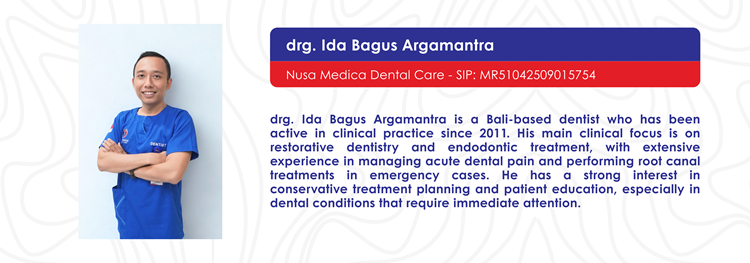
Author: drg. Ida Bagus Argamantra